WATER LIMS | WASTEWATER LIMS | DRINKING WATER LIMS | ENVIRONMENTAL LIMS
LIMS for Water, Wastewater & Environmental Testing Laboratories
Streamline QC workflows while maintaining ISO/IEC 17025 compliance for soil, air, water & wastewater testing.
Trusted by water utilities & environmental labs across the world
Purpose-built LIMS Workflows for Water & Environmental Compliance
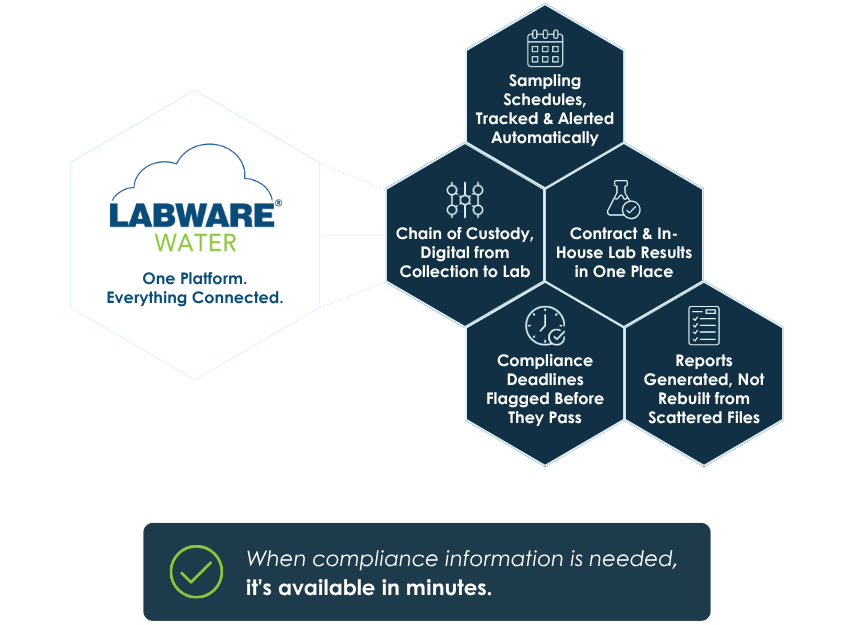
LabWare WATER organizes your entire water quality compliance program into six connected steps. Each step flows into the next, keeping your team aligned and your documentation complete.
Select a step below:
- 1. Plan
- 2. Collect
- 3. Test
- 4. Review
- 5. Report
- 6. Prove
Step 1 of 6
Plan
Know What's Due
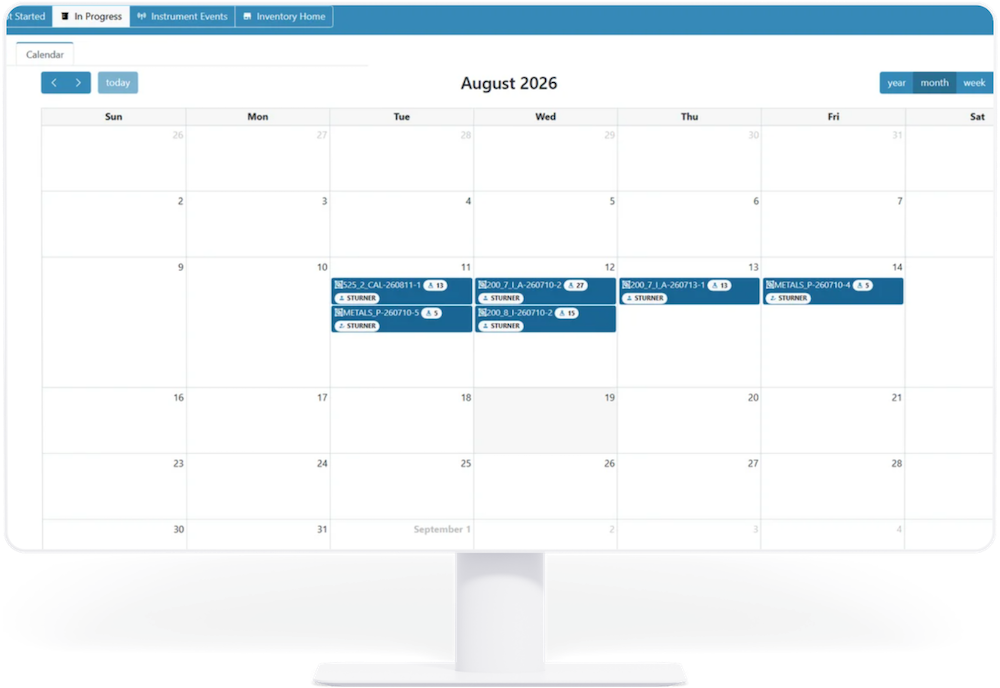
Monthly, quarterly, annual, and event-driven sampling schedules managed in one place. No more calendar reminders and spreadsheet lookups to know what testing is required and when.
Step 2 of 6
Collect
Gather With Confidence
Sample locations, bottle types, preservatives, chain of custody, and field instructions are all ready before crews leave the facility. Your team collects the right samples the right way, every time. LabWare MOBILE enables easy collection in the field.
Step 3 of 6
Test
Track Every Sample
Follow samples from collection through testing, whether your laboratory is in-house, a contract lab, or a combination of both. LabWare WATER gives you complete visibility at every stage.
Step 4 of 6
Review
Identify Issues Early
Flag exceedances, missing results, overdue samples, and approaching reporting deadlines before they become compliance problems. Traceability runs from every result back to the original sample.
Step 5 of 6
Report
Stop Rebuilding Reports
Generate compliance reports from information already in the system. Your data is already there. LabWare WATER compiles it into the required format without rebuilding from scattered spreadsheets and files.
Step 6 of 6
Prove
Stay Audit Ready
Retrieve sampling history, results, chain-of-custody records, and compliance documentation in minutes. When an inspector arrives, your records are complete, traceable, and immediately accessible.
The Challenge
One Compliance Program.
Too Many Disconnected Tools.
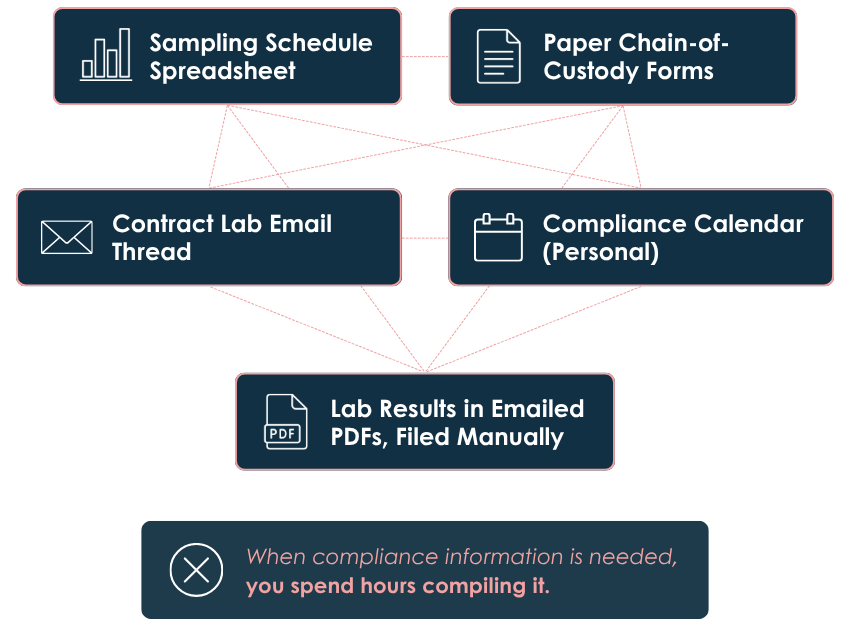
Most water and environmental testing programs manage compliance across a combination of spreadsheets, paper chain-of-custody forms, emailed lab reports, and personal calendar reminders. LabWare WATER replaces that fragmented approach with a single connected system covering the full compliance workflow, from planning through audit readiness, at an affordable price point that does not require enterprise IT resources to run.
Most Water & Environmental Testing Programs
With LabWare WATER
Solutions by Testing Program
One System for All Testing Programs
-
Learn More
Water quality programs are defined by location. Source water, treatment plant process points, distribution system sites, storage facilities, and customer complaint samples each carry their own testing requirements, frequencies, and limits.
LabWare LIMS built for water testing treats the sampling point as a first-class record, so the required tests, methods, QC, and limits travel with the location rather than living in someone's head or a spreadsheet tab.
Field data arrives from meters and sondes rather than being rekeyed from a clipboard. Results that exceed a limit are flagged when they are entered, not when someone reviews the monthly report. And when a customer complaint sample comes in unscheduled, it enters the same system with the same traceability as routine work.
-
Core Capabilities
✔ Sampling point registry with location-specific test, method, and limit definitions
✔ Automated scheduling for routine, seasonal, and event-driven sampling
✔ Electronic chain of custody generated at the point of collection
✔ Field meter and sonde data import with GPS and timestamp capture
✔ Real-time exceedance flagging against regulatory and internal limits
✔ Trend and control charting across sampling points and time periods
✔ Unscheduled and complaint sample handling with full traceability
WASTEWATER LIMS
Wastewater LIMS for Treatment Plants & Discharge Monitoring
LabWare's wastewater LIMS manages influent and effluent monitoring, permit limit tracking, loading calculations, pretreatment programs, and Discharge Monitoring Report generation.
-
Learn More
Wastewater compliance runs on permits. Each outfall carries its own monitoring frequency, limits, averaging periods, and reporting obligations, and the penalty for missing one is not an internal quality issue but a permit violation.
LabWare LIMS configured for wastewater keeps the permit structure in the system so that limits, averaging windows, and calculation rules are applied consistently rather than reconstructed in a spreadsheet each reporting period.
Composite and grab sampling, flow-proportional compositing, BOD and solids calculation chains, and loading computations all run automatically from the underlying data. Discharge Monitoring Reports are generated from approved results, which means every number on the submittal traces back to a specific sample, analyst, instrument, and QC batch.
-
Core Capabilities
✔ Permit and outfall configuration with limits and averaging periods
✔ Influent, effluent, and in-process monitoring in one workflow
✔ Composite and grab sample management with flow-proportional support
✔ Automated BOD, solids, loading, and removal efficiency calculations
✔ Discharge Monitoring Report generation from approved results
✔ Industrial pretreatment and significant user tracking
✔ Biosolids and residuals testing and disposal records
DRINKING WATER LIMS
Drinking Water LIMS and Safe Drinking Water Act Compliance
LabWare's drinking water LIMS manages regulatory monitoring schedules, coliform and disinfection by-product testing, Lead and Copper Rule sampling, and reporting to primacy agencies.
-
Learn More
Drinking water monitoring is prescriptive. The rules define what gets sampled, where, how often, and by when, and the schedule shifts based on system size, source type, and prior results.
LabWare LIMS understands this and generates the monitoring calendar from the rule requirements rather than depending on someone to maintain it manually, and it flags an approaching deadline before it becomes a monitoring violation.
Coliform sampling and repeat sample logic, disinfection by-product locational running annual averages, Lead and Copper Rule site selection and tier tracking, and the annual Consumer Confidence Report all draw from the same approved result set rather than from separately maintained files.
-
Core Capabilities
✔ Regulatory monitoring schedules driven by rule requirements
✔ Total coliform sampling with repeat and triggered source logic
✔ Disinfection by-product monitoring and running annual averages
✔ Lead and Copper Rule site tiering, sampling, and 90th percentile calculation
✔ Consumer Confidence Report data assembly from approved results
✔ Primacy agency reporting formats and electronic submittal support
✔ Deadline alerting ahead of monitoring and reporting due dates
ENVIRONMENTAL LIMS
Environmental LIMS for Soil, Air & Waste Testing
LabWare's environmental LIMS manages project and site-based sampling, method-driven analytical workflows, batch QC, hold time control, and electronic data deliverables for environmental testing laboratories.
-
Learn More
Environmental laboratories work by project. A site investigation generates hundreds of samples across multiple matrices with a defined analytical suite, a client-specific reporting format, and a data package that has to hold up to third-party validation.
The organizing unit is not the sample, it is the project, and a LIMS that does not understand that forces the laboratory to track project structure outside the system.
LabWare manages sample delivery groups, batch QC association, matrix spike and duplicate assignment, dry weight and leachate reporting, and the electronic data deliverable formats that consultants and agencies require. Subcontracted analyses come back into the same project record rather than arriving as a PDF that someone retypes.
-
Core Capabilities
✔ Project, site, and sample delivery group structure
✔ Multi-matrix support across water, soil, sediment, air, and waste
✔ Method-driven workflows with batch QC and control limit evaluation
✔ Hold time calculation from collection with prep and analysis tracking
✔ TCLP and SPLP leachate handling and dry weight basis reporting
✔ Electronic data deliverable generation in client and agency formats
✔ Contract laboratory result import into the same project record
Emerging Contaminants
PFAS Testing & UCMR Reporting
LabWare supports PFAS analysis which breaks the assumptions most laboratory systems were built on. Reporting limits are in the parts per trillion, blanks matter as much as samples, and the analyte lists keep changing.
-
Core Capabilities
✔ Analyte lists and reporting limits maintained per method, updated as regulatory lists change
✔ Field blanks, equipment blanks, and laboratory blanks tracked alongside their associated samples
✔ Isotope dilution calculations and recovery acceptance criteria applied automatically
✔ Any detection in an associated blank flagged before results are released
✔ Sampling schedules and result reporting for UCMR monitoring periods
✔ Trace-level significant figure and reporting limit handling that does not round away the answer
Sample Login and Chain of Custody
Pre-logged sampling runs, barcode label printing, single-scan receipt, and electronic chain of custody that replaces paper forms. Pre-configured projects mean a monthly sampling run logs in one action rather than sample by sample.
Field Collection and Mobile Capture
Collectors download the day's schedule, capture GPS coordinates and field readings at the site, and sync back to the laboratory in real time. LabWare MOBILE runs on iOS and Android, so field data never passes through a clipboard.
Wet Chemistry and Bench Entry
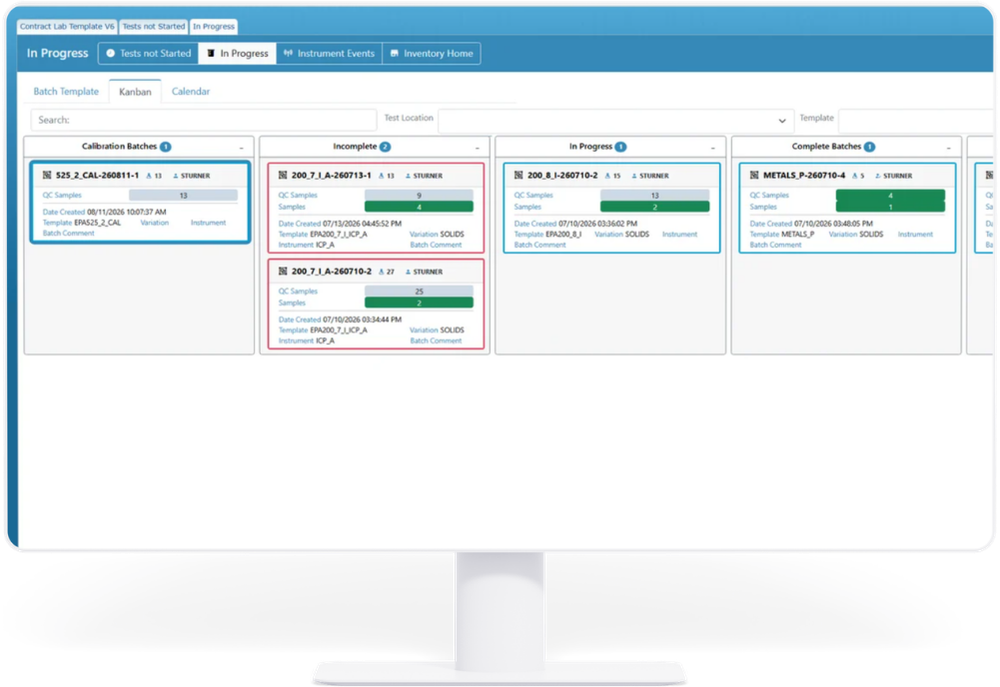
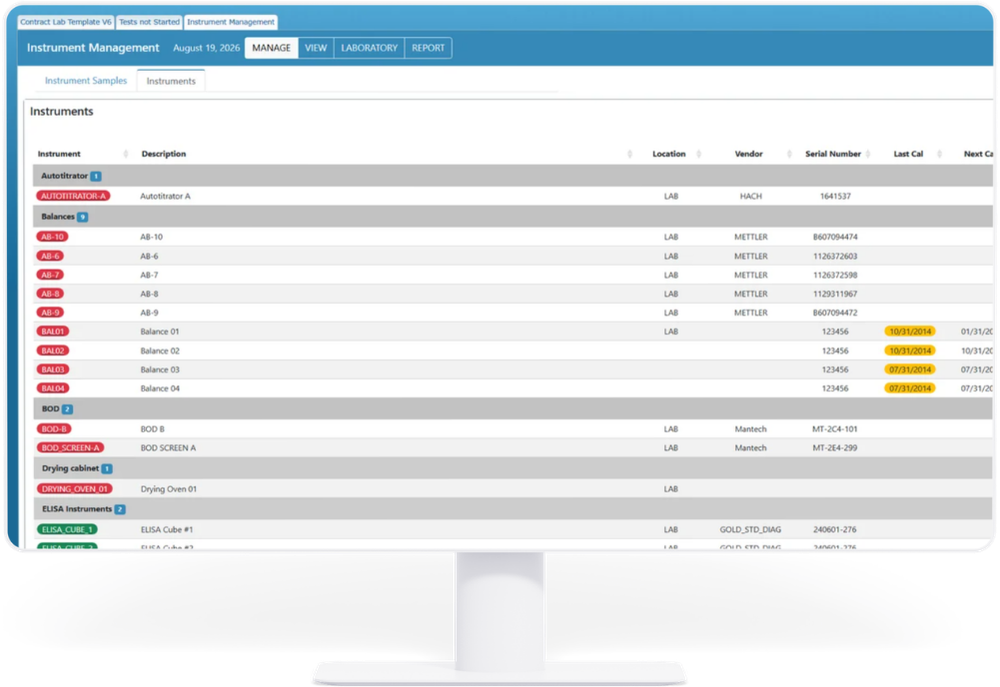
Bench sheets and worklists organized by analyst and instrument, direct connection to balances, pH and dissolved oxygen meters, spectrophotometers, and ion chromatographs, with calculations applied automatically rather than by hand.
Inorganics and Metals
Digestion and preparation tracking from hot block through microwave, prep factor calculation carried into the analysis, autosampler worklist export, and result import from ICP, ICP-MS, AA, and GFAA instrumentation.
Organics and Trace Analysis
Purge and trap and extraction step tracking, reagent lot and expiry capture, dilution and cleanup management, solvent exchange records, and bidirectional interfacing with GC, GC-MS, and LC-MS-MS systems.
Microbiology
Alphanumeric and qualitative result support for TNTC, presence and absence, and greater-than results, plus MPN calculation, membrane filtration with dilution accounting, and workflows for coliform, HPC, Giardia, and Cryptosporidium.
Calculations and QA/QC
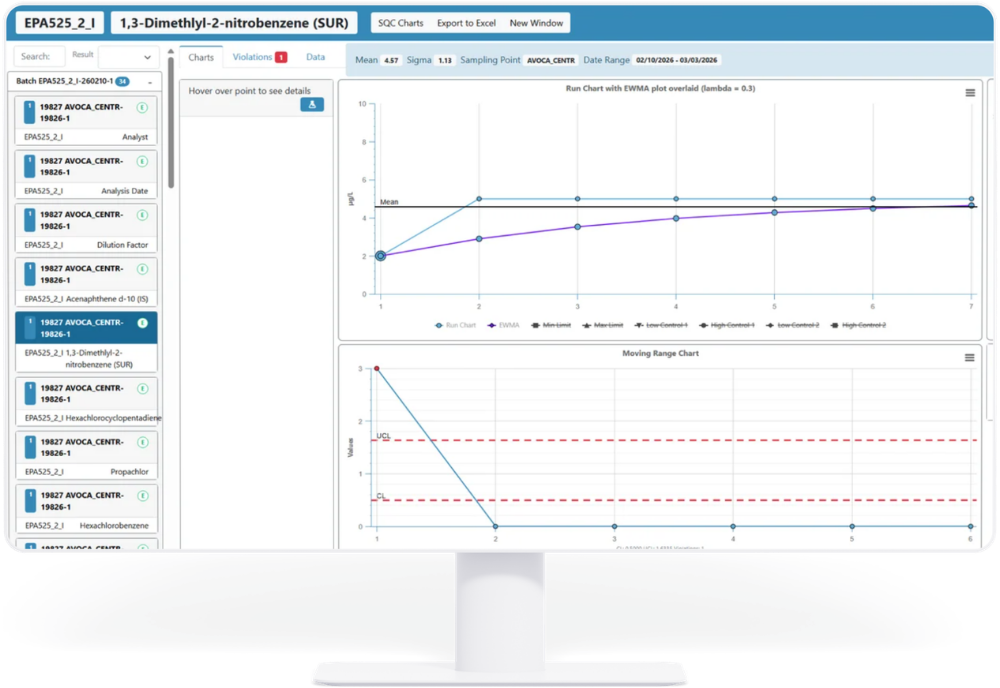
Validated calculations replace hand math and Excel: gravimetric, solids and moisture, Langelier Index, MPN, and BOD. Control charts, mean and standard deviation, analyst comparison, and automatic flagging of out-of-control batches.
Review, Approval, and Audit Trail
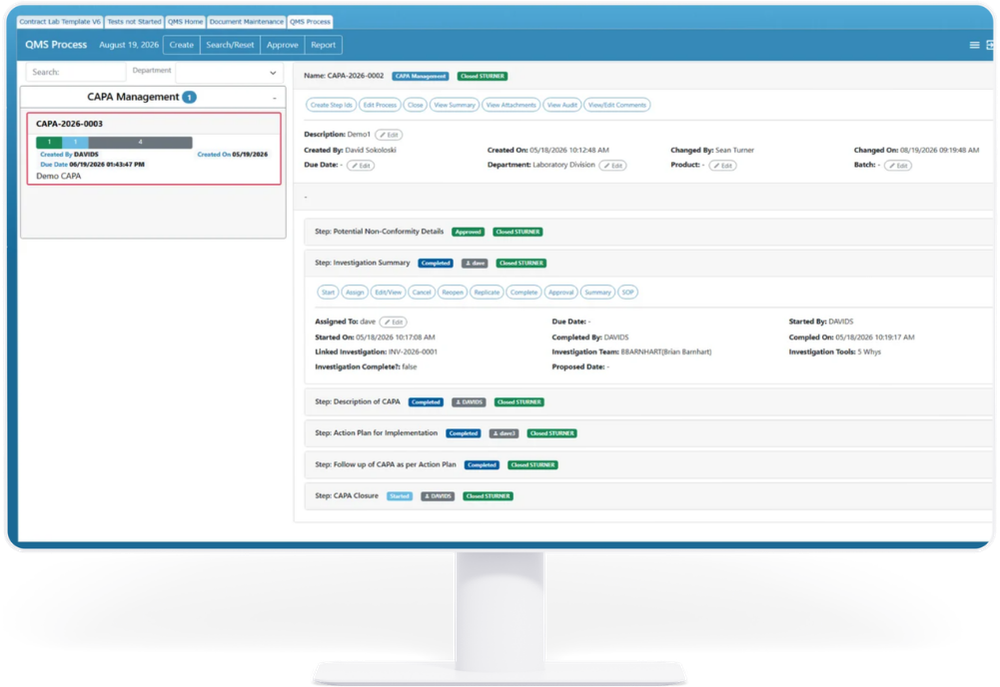
Multi-level review with electronic signature, configurable approval rules, and a complete audit trail covering every change to a result, including who changed it, when, and why. Approved data is locked and traceable.
Reporting and Client Portal
Certificates of analysis, operational reports, regulatory submittals, and electronic data deliverables generated from approved results. A secure portal gives clients, engineers, and internal stakeholders round-the-clock access to status and results.
PROVEN IN WATER
Built on Four Decades of Experience in Water & Environmental QC Laboratories
Water utilities, environmental laboratories, and regulatory agencies around the world have relied on LabWare to manage laboratory operations, compliance programs, and critical scientific data for more than 30 years. LabWare WATER brings that global experience to an affordable cloud solution designed specifically for small and mid-size municipal water utilities.

Oklahoma City Water Utilities Trust serves 1.5 million customers across the greater metropolitan area. LabWare MOBILE helped the utility modernize field data collection, improving accuracy and reducing the administrative burden on compliance staff.
How Teams Grow with WATER
1️⃣ Organize your compliance program
LabWare WATER organizes your entire water quality compliance program into six connected steps keeping your team aligned and your documentation complete.
2️⃣ Launch in under 30 days
Pre-configured workflows, pre-validated out of the box. No lengthy implementation cycle, no IQ/OQ/PQ backlog.
3️⃣ Add capabilities at your pace
Add new capabilities to your existing data. One platform, growing with your team.
4️⃣ Scale to enterprise when ready
Multi-site, multi-country, or fully custom enterprise requirements can be addressed through the LabWare enterprise platform without starting over.
Laboratory Instruments
Unidirectional and bidirectional interfaces across chromatography, spectroscopy, microbiology, and general laboratory instrumentation, with worklist export and result import.
Operations and Process Systems
SCADA and historian connections so laboratory results and process data sit in the same operational picture rather than in separate reporting cycles.
Utility Compliance Platforms
Data exchange with the operational and compliance systems commonly used by water and wastewater utilities for permit tracking and regulatory submittal.
Field Instrumentation
Import from multiparameter sondes and field meters, with the reading tied to the sampling point, timestamp, and collector rather than transcribed later.
Enterprise Systems
ERP integration including SAP, Oracle, and Microsoft Dynamics for billing, procurement, and asset data, plus interfaces to accounting and invoicing platforms.
Contract Laboratories
Structured import of subcontracted results through electronic data deliverable formats, validated against the expected sample and method on arrival.
FAQ
Water & Environmental LIMS Questions Answered
A water LIMS is a laboratory information management system configured for water quality testing. It manages sampling point registries and sampling schedules, generates chain of custody records at the point of collection, captures results from laboratory instruments and field meters, applies regulatory limit checks, and produces the compliance reports water laboratories are required to submit. It replaces the spreadsheets, paper bench sheets, and manual report assembly that many water laboratories still rely on.
A wastewater LIMS manages the sampling and analytical workload of a wastewater treatment facility or discharge monitoring program. It tracks influent and effluent sampling against permit requirements, manages composite and grab sample collection, automates calculations such as BOD, solids, and loading, tracks industrial pretreatment users, and generates Discharge Monitoring Reports for NPDES permit compliance.
An environmental LIMS is a laboratory information management system built for laboratories testing environmental media including water, soil, sediment, air, and waste. It supports project and site-based sample management, method-driven analytical workflows, hold time tracking, batch QC, dry weight and leachate reporting, and the electronic data deliverable formats that regulatory agencies and consulting clients require.
The underlying system is the same. The difference is configuration. A water LIMS is typically configured around distribution system sampling points, drinking water regulatory limits, and reporting to primacy agencies. A wastewater LIMS is configured around permitted discharge points, influent and effluent monitoring, loading calculations, and Discharge Monitoring Report generation. Most utilities run both programs, and many laboratories manage drinking water, wastewater, and environmental sampling in a single LIMS.
A water and environmental LIMS is a laboratory information management system that tracks a sample from the moment it is collected in the field through analysis, review, and regulatory reporting, keeping the sampling schedule, chain of custody, analytical results, quality control, and audit trail in one connected record.
Water and environmental laboratories carry a burden most laboratories do not. The work is scheduled by regulation rather than by demand, hold times start ticking the moment a sample is collected rather than when it reaches the bench, and the output is not just a result but a defensible record that has to survive an audit years later.
Most laboratories in this sector still hold that record across several systems: a scheduling spreadsheet, paper chain of custody forms, instrument files on a shared drive, a separate QC workbook, and a reporting process that means rebuilding the same numbers by hand every month. Each handoff between those systems is a place where a hold time gets missed, a transcription error enters the record, or an audit response takes two weeks instead of ten minutes.
LabWare LIMS holds the whole lifecycle in one place, configured to the way your laboratory actually works rather than to a generic template.
Yes. A LIMS configured for wastewater compliance can generate Discharge Monitoring Reports directly from approved analytical results, applying the permit limits, averaging periods, and calculation rules defined for each outfall. Because the report is built from data already in the system rather than rekeyed from spreadsheets, the values are traceable back to the original sample, analyst, instrument, and QC batch.
Yes. A LIMS holds the annual monitoring results, detection ranges, and regulatory limit information that a Consumer Confidence Report requires. Rather than assembling the report from archived spreadsheets and past submittals, the data can be extracted directly from approved results for the reporting year, with full traceability to the underlying samples.
Accreditation under TNI standards or ISO/IEC 17025:2017 requires documented control over methods, personnel competency, instrument calibration, quality control, data integrity, and corrective action. A LIMS maintains these records as part of daily operations rather than as a separate documentation exercise: analyst certifications and training records, instrument calibration and maintenance schedules, method definitions with control limits, QC batch acceptance criteria, a complete audit trail of every data change, and electronic signature control over result approval.
A LIMS calculates hold time from the sample collection timestamp rather than from receipt, applies the hold time defined for each analytical method, and flags samples approaching or exceeding their limit. Preparation and analysis steps are timestamped, so a hold time violation is identified when it happens rather than discovered during data review or an audit. Analysts can be prevented from entering results against a sample whose hold time has expired.
PFAS analysis places unusual demands on a laboratory: very low reporting limits, strict field and laboratory blank controls, isotope dilution quantitation, and large analyte lists that change as regulations evolve. A LIMS supports this by managing the analyte lists and reporting limits for each method, tracking field blanks and equipment blanks alongside their associated samples, applying isotope dilution calculations and recovery acceptance criteria automatically, and flagging any detection in an associated blank before results are released.
Yes. Laboratories and utilities that subcontract some analyses can import contract laboratory results into the same system that holds their in-house data. Results arrive through electronic data deliverable formats or configured file imports, are validated against the expected sample and method, and become part of the same record used for compliance reporting. This removes the manual rekeying that typically happens when subcontracted results arrive as PDFs or spreadsheets.
Environmental LIMS pricing depends on deployment model, number of users and sites, the analytical scope being configured, and whether validation services are required. Subscription SaaS options priced for a single small laboratory sit at one end of the range, and multi-site enterprise deployments with formal validation sit at the other. LabWare offers self-hosted, cloud-hosted, and SaaS options so that laboratories can match cost and complexity to their actual requirements. Contact LabWare for pricing based on your laboratory's scope.
Timelines vary with scope. A pre-configured SaaS deployment for a single laboratory can be operational in weeks. A multi-site enterprise implementation involving legacy data migration, instrument interfaces, enterprise system integration, and formal validation typically runs several months. The largest variables are the number of methods being configured, the number of instrument and system interfaces required, and the depth of validation documentation needed for accreditation.
98% of Labs Recommend LabWare
Organizations of all sizes and from all industries trust LabWare to streamline their laboratory operations.