

 Icha Destriany
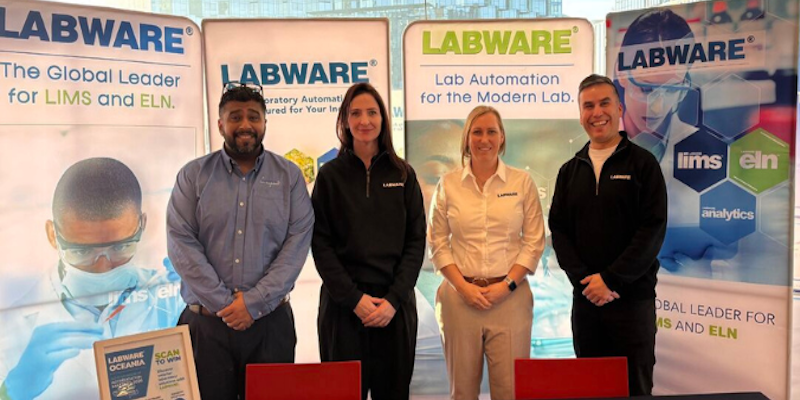
Following LabWare's participation as a Gold Sponsor at Accreditation Matters 2026, the National Association of Testing Authorities, Australia (NATA) conference, the conversation around ISO/IEC 17025 continued with a deeper look at what happens beyond accreditation. Achieving accreditation to ISO/IEC 17025, the international standard for the competence of testing and calibration laboratories, is an important milestone. The bigger challenge is translating the requirements of the standard into everyday practices that support competence, traceability, data integrity, and quality.
In our recent webinar, "Beyond Accreditation: Building a Digital Laboratory for ISO/IEC 17025," Andrew Maxwell from LabWare Asia Pacific, along with Cassandra Henderson and Leanne Hoxey from LabWare Oceania, explored how laboratories can move beyond simply meeting accreditation requirements and build a more connected digital laboratory environment.
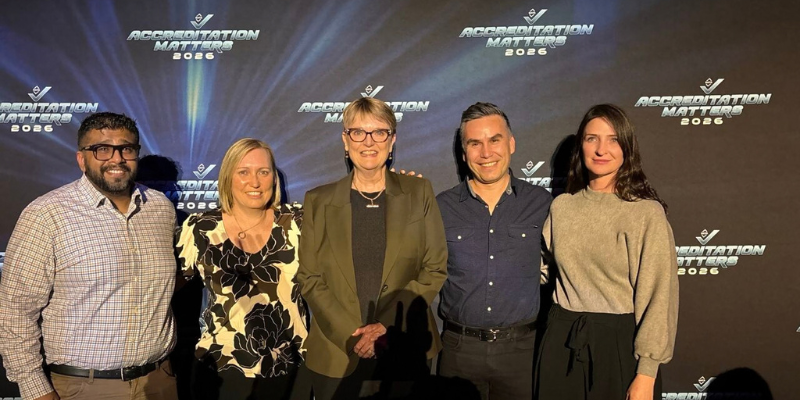
LabWare Oceania team with Jennifer Evans (center), former NATA CEO, at the Accreditation Matters 2026 conference in Melbourne
The webinar focused on a practical question: how can laboratories turn ISO/IEC 17025 requirements into controls that support everyday operations?
From Fragmented Systems to a Connected Laboratory
Many laboratories manage their quality processes across a combination of spreadsheets, paper records, document repositories, standalone systems, and a Laboratory Information Management System (LIMS).
This fragmented approach can increase administrative work, duplicate data entry, and make information harder to trace, particularly during audits or investigations. We highlighted the difference between a traditional LIMS, focused on samples, tests, and results, and an enterprise LIMS that connects the wider laboratory ecosystem.
LabWare LIMS can connect laboratory operations with people, equipment, materials, methods, data, and quality processes, creating a more complete chain of information around each result. For example, a result can be linked to the analyst, their training and competency status, the equipment and method used, relevant materials, approvals, and any subsequent quality events.
Discover more: LIMS Traceability Quality: Boosting Lab Performance
Turning ISO/IEC 17025 Requirements into Everyday Controls
Rather than reviewing ISO/IEC 17025 clause by clause, we grouped the requirements around three practical questions:
- Are the people, equipment, and materials fit for purpose?
- Can the laboratory trust the data and reported results?
- How are quality events, documents, and oversight controlled?
These questions reflect the practical controls laboratories need to demonstrate competence, traceability, data integrity, and effective quality management.
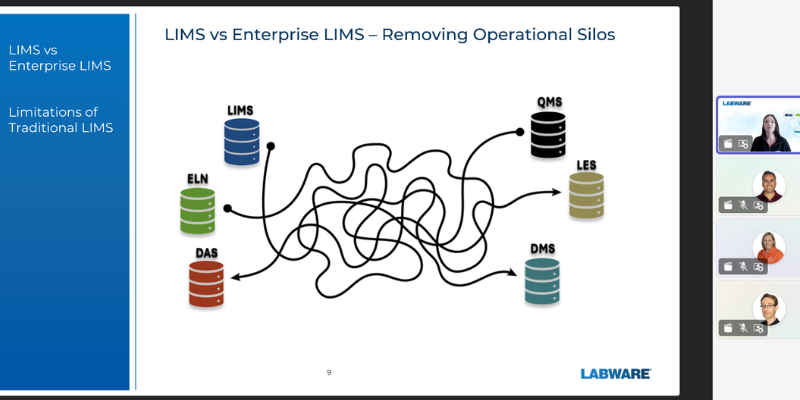
Cassandra Henderson, LabWare Oceania Sales Executive, discussed LabWare's enterprise LIMS during the webinar
People, Equipment, and Materials
Competence is more than simply recording that an employee attended training. Laboratories need to know whether personnel are trained, authorized, and currently competent for specific activities.
LabWare LIMS can connect training and competency information to laboratory activities and specific analyses. Equipment records can include calibration, maintenance, performance checks, and status, helping teams confirm whether instruments are fit for use.
The same approach applies to reagents and reference materials, with lot numbers, expiry dates, certificates, and usage history connected to laboratory work.
Protecting Data Integrity from Testing to Reporting
ISO/IEC 17025 requires laboratories to maintain confidence in their technical records and reported results. During the webinar, we demonstrated how LabWare LIMS guides analysts through controlled procedures, checking instrument suitability and enforcing required steps as work is performed.
Connected equipment can also send data directly into LIMS. For example, weighing results from a connected balance can be captured automatically, reducing manual transcription. By bringing quality controls into the laboratory workflow, LabWare LIMS creates a traceable record of how work was performed, from testing through review.
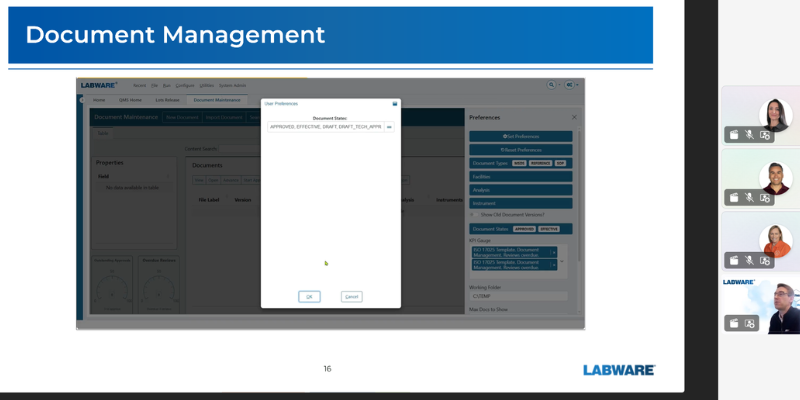
Andrew Maxwell, LabWare Asia Pacific Technical Sales, demonstrated LabWare's enterprise LIMS during the webinar
Connecting Quality Events with Laboratory Data
Even well-controlled laboratories can encounter deviations, nonconforming work, and other quality events. What matters is how these events are investigated and managed.
With LabWare LIMS, a nonconforming result can trigger a structured investigation linked to the relevant samples and quality information, with responsibilities, approvals, and actions recorded in the system.
By connecting quality events with laboratory data, users can trace related samples, laboratory activities, materials, and other records, giving QA teams greater context into what happened.
Discover more: Achieving Excellence with LIMS Quality Control
From Audit Preparation to Continuous Visibility
A centralized laboratory environment can help reduce manual administration, improve traceability, and make information easier to retrieve. Instead of relying heavily on spreadsheets and manual coordination, laboratory managers can gain greater visibility into workload, bottlenecks, quality events, and performance.
This can also support audit readiness. When evidence is captured as part of normal laboratory workflows, teams can access information related to results, processes, and quality events without treating every assessment as a separate data-gathering exercise.
Moving from Accreditation to Everyday Practice
For laboratories considering this transition, we outlined several practical starting points:
- Map existing workflows. Identify manual steps, inefficiencies, and opportunities for standardization.
- Audit the current software environment. Review the systems currently supporting laboratory and quality activities, including associated licensing, maintenance, and upgrade costs.
- Conduct a gap assessment. Identify where current processes and systems may need improvement and where multiple sites could benefit from greater harmonization.
- Learn from other laboratories. Reference customers and peer experiences can provide valuable insight into how similar laboratories have approached digital transformation.
- Evaluate enterprise LIMS capabilities. Consider integration, configuration, scalability, and the ability to connect laboratory and quality processes within a broader digital ecosystem.
By connecting people, equipment, materials, data, and quality processes, laboratories can embed traceability, data integrity, and quality into everyday work rather than treating them as a separate compliance exercise.
Curious to Know More?
See how LabWare LIMS can help connect laboratory workflows, quality processes, and data in one digital environment.
Stay Connected
Follow us for the latest news, events, industry insights, and updates from the APAC laboratory community.
 Follow LabWare Asia Pacific on LinkedIn